Reverse Osmosis Water Systems
If you want the cleanest, best-tasting water your home can produce, reverse osmosis (RO) is the most thorough treatment available. Foulk Brothers Plumbing & Heating installs under-sink and whole-home reverse osmosis systems for homeowners throughout Sioux City, Iowa, North Sioux City, South Dakota, South Sioux City, Nebraska, Le Mars, Iowa, Dakota Dunes, South Dakota, Elk Point, South Dakota and Vermillion, South Dakota, removing lead, nitrates, chlorine byproducts and other contaminants that carbon filtration alone can miss.
How Reverse Osmosis Works
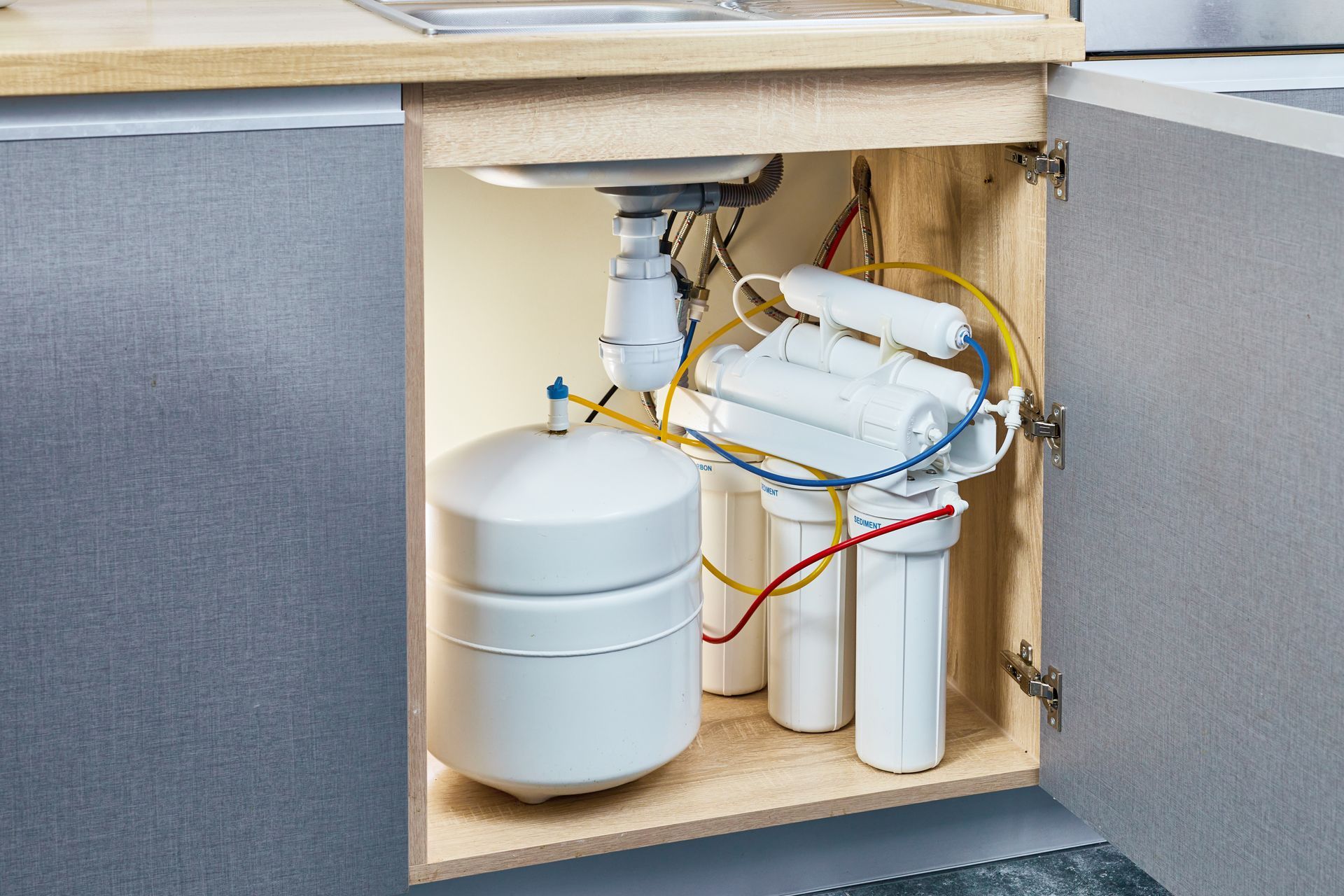
Reverse osmosis sounds technical, but the idea behind it is simple. Your water is pushed through a series of filters and then through a membrane with pores so small that only water molecules can pass through. Everything else, dissolved minerals, heavy metals, nitrates, salts and other impurities, gets trapped and flushed away as wastewater, while the purified water is sent to a dedicated storage tank ready for use at your tap. A typical system also includes a pre-filter to remove sediment and chlorine before the membrane stage, and a post-filter to polish the water's taste right before it reaches your glass. The result is water that is dramatically cleaner than what comes out of the tap, often cleaner than many bottled waters, produced right in your own home on demand.
Under-Sink RO Systems
An under-sink reverse osmosis system is installed directly beneath your kitchen sink and delivers purified water through a dedicated faucet. It is the most affordable way to get RO-quality drinking and cooking water, with a compact footprint and straightforward maintenance. Most households choose this option to upgrade the water they drink most, without treating water used for laundry, bathing or the whole house.
Whole-Home RO Systems
A whole-home reverse osmosis system treats water at the point it enters your house, so every tap, shower, appliance and ice maker benefits from the same purified water. This option makes sense for well-water households dealing with heavier contamination, or for anyone who wants purified water throughout the entire home rather than at a single faucet. It requires more space and a larger investment than an under-sink unit, and our team will help you decide whether the added coverage is worth it for your water quality and household needs.
Contaminants RO Removes, Including Lead, Nitrates and Chlorine Byproducts
Reverse osmosis is one of the few treatment methods that can remove contaminants carbon filtration cannot touch. The membrane rejects dissolved solids and heavy metals, including trace lead that can leach from older service lines and household plumbing. It also removes nitrates, a persistent concern for well owners across Iowa's agricultural areas, where fertilizer and manure runoff can seep into groundwater and, in high concentrations, pose a real health risk, especially for infants and pregnant women. RO also strips out chlorine byproducts such as trihalomethanes that form when municipal disinfection reacts with organic matter, along with sulfates, arsenic, fluoride and many other dissolved impurities. For homes relying on private wells in our service area, that combination of nitrate and lead reduction is often the deciding factor in choosing reverse osmosis over a standard carbon filter alone. We recommend a water test before installation so we can confirm exactly which contaminants are present and size the system to handle them.
Filter Replacement Schedule
Most RO systems need the sediment and carbon pre-filters replaced every six to twelve months, depending on your water quality and household usage. The membrane itself typically lasts two to three years before it needs replacing, while the post-filter is usually swapped annually to keep the final taste crisp. Homes on well water with heavier sediment or iron may need more frequent pre-filter changes.
Ongoing Maintenance
Beyond filter swaps, a quick annual checkup keeps your system performing at its best: checking the storage tank pressure, inspecting tubing and connections for leaks, and testing output water quality. Our team can set you up on a maintenance schedule so filters are replaced on time and your system keeps delivering the same clean water year after year, without you having to track it yourself.

Cost Per Gallon vs. Bottled Water
An under-sink reverse osmosis system typically produces purified water for just a few cents per gallon once installed, factoring in filter replacements and the small amount of electricity used. Bottled water, by comparison, often runs a dollar or more per gallon at the store, and that gap adds up fast for a family that goes through several gallons a week. Over a year, most households recover the cost of an RO system many times over in bottled water savings alone, before even counting the convenience of never running out or hauling cases home from the store. It is also better for the environment, cutting down on plastic waste while giving you water that is tested and matched to your home rather than a generic bottled product. For homeowners already spending on bottled water for taste or safety reasons, reverse osmosis usually pays for itself within the first year or two.
Ready for Truly Clean Water?
Contact Foulk Brothers Plumbing & Heating to schedule a water test and find the right reverse osmosis system for your home.